


Gallery
Frequently Asked Questions
What is 2K injection molding?
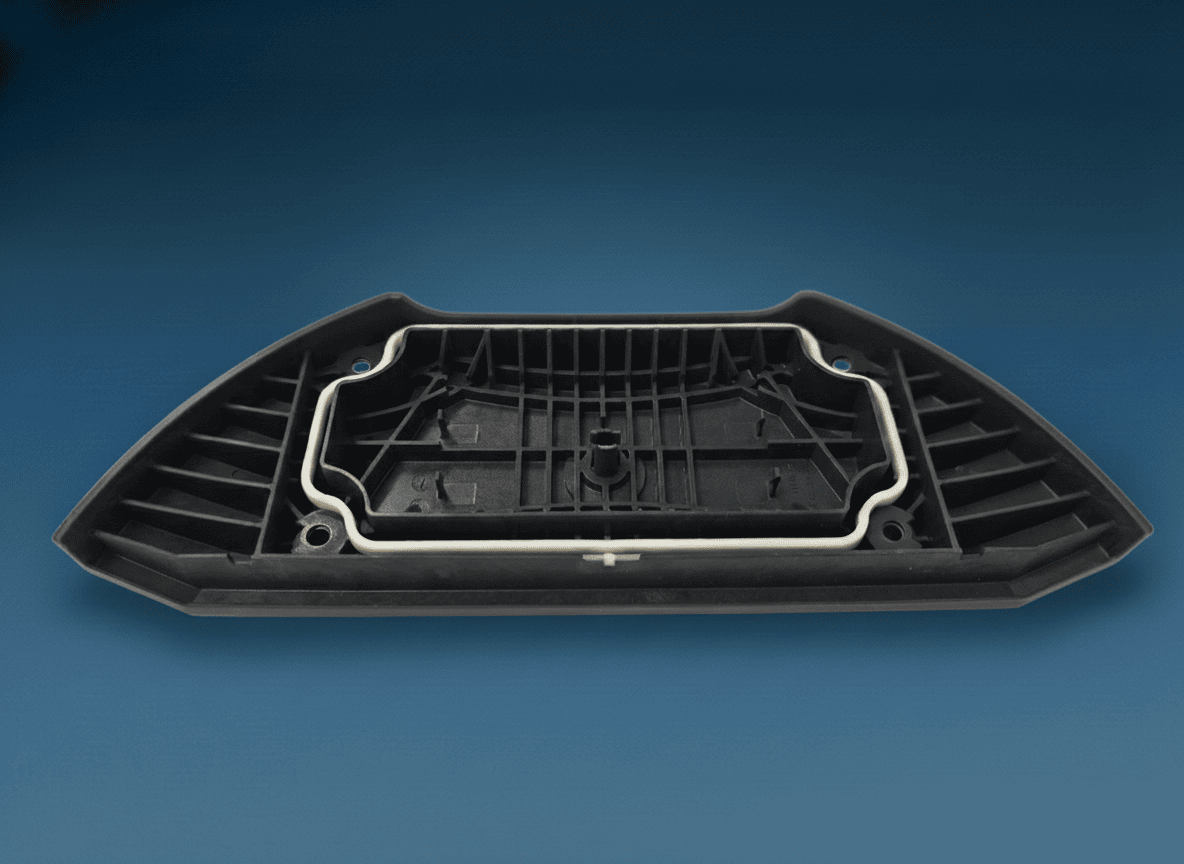
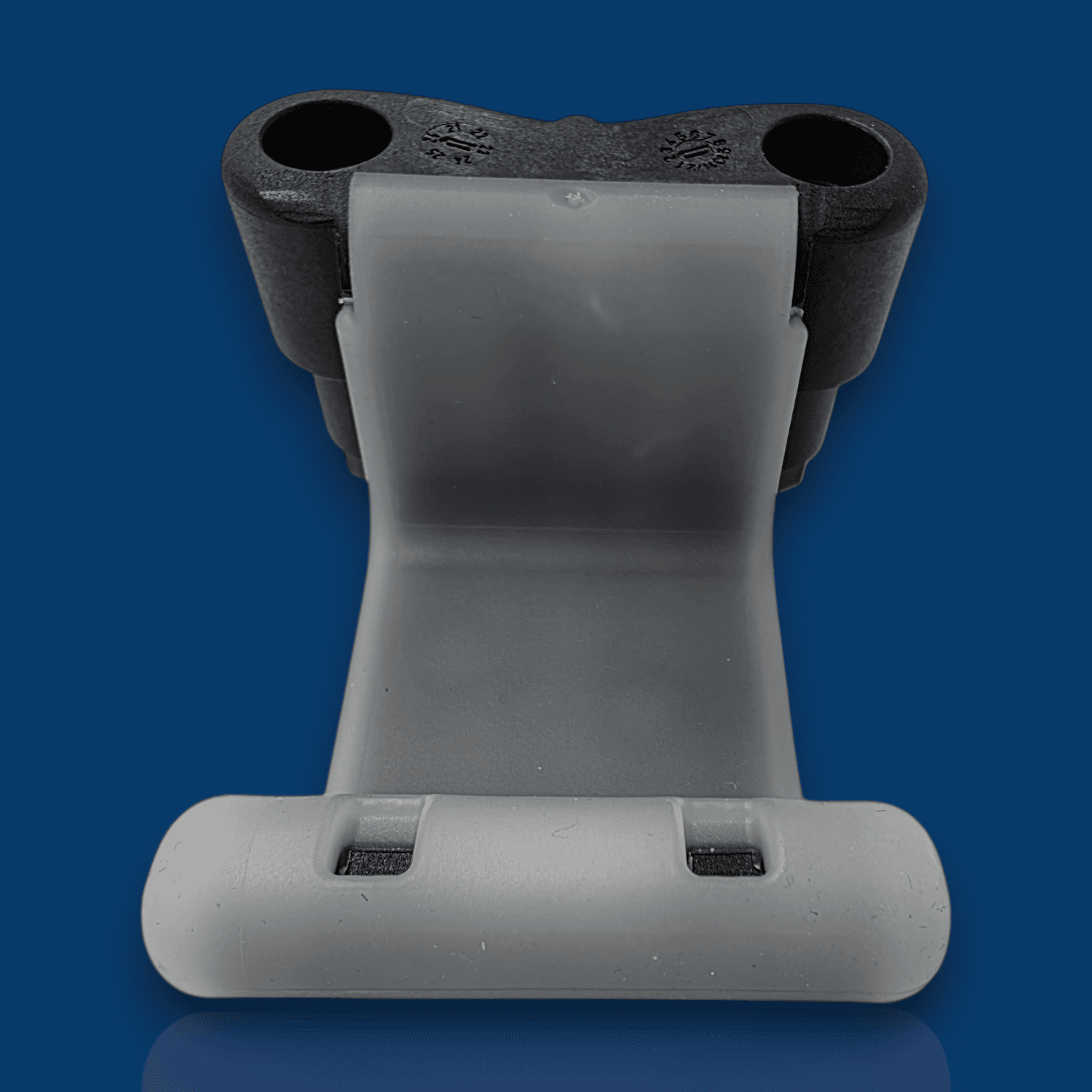
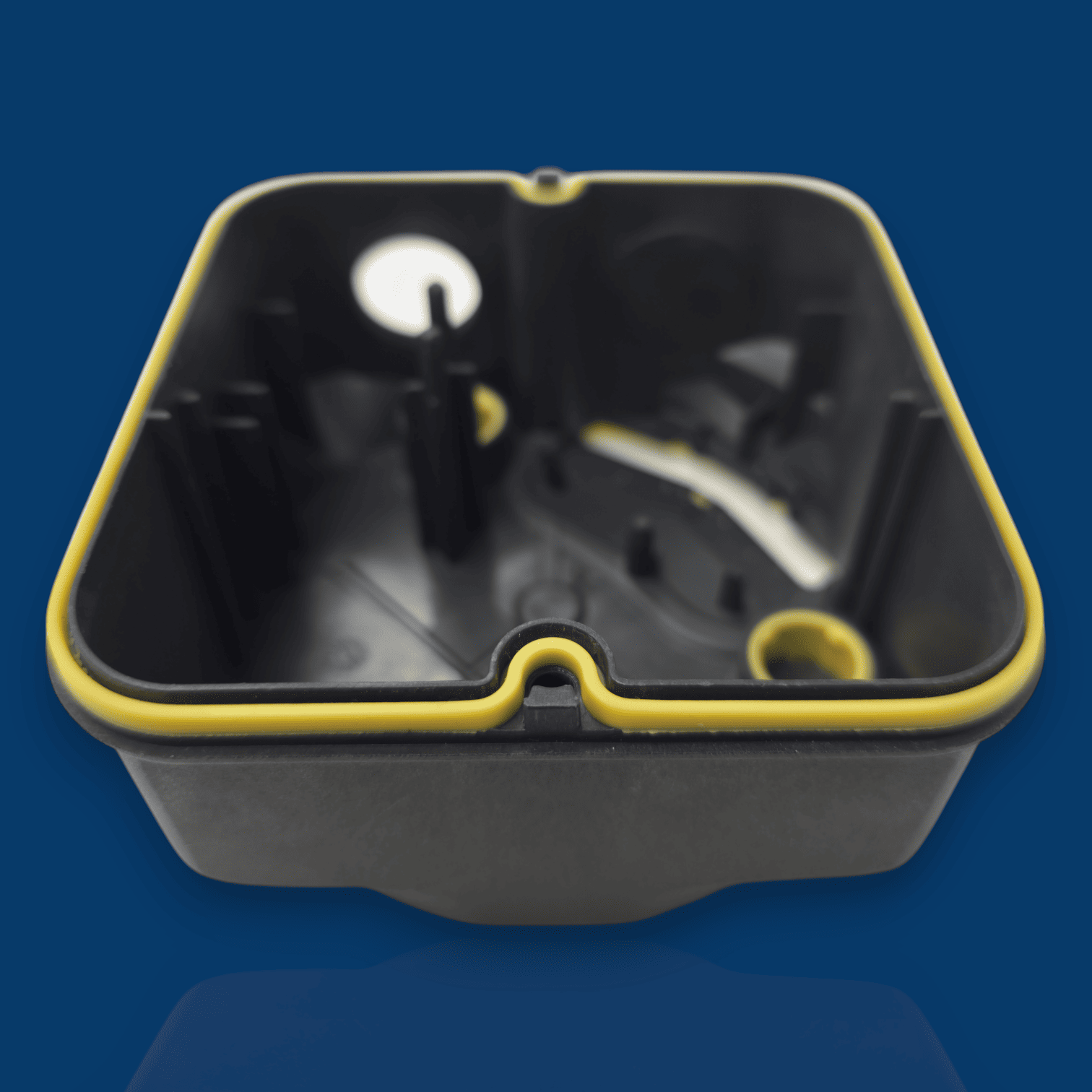
2K injection molding, also known as two-shot molding or multi-component injection molding, combines two different materials into a single component during one manufacturing process. Typically, a rigid thermoplastic is combined with a flexible elastomer such as TPE, allowing sealing, damping and protective functions to be integrated directly into the part.
What are the advantages of 2K injection molding?
2K injection molding enables the production of complex plastic components with multiple functions in a single manufacturing step. Additional assembly, bonding or joining processes can often be eliminated, reducing costs, improving process reliability and enhancing overall part quality.
Which materials can be combined in 2K injection molding?
A wide range of thermoplastics and elastomers can be combined in multi-component injection molding. Common material combinations include PA, PBT, PC or ABS with TPE. Material selection depends on the required mechanical properties, temperature resistance, chemical resistance and bonding performance.
Can seals be molded directly onto the component?
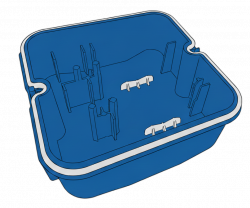
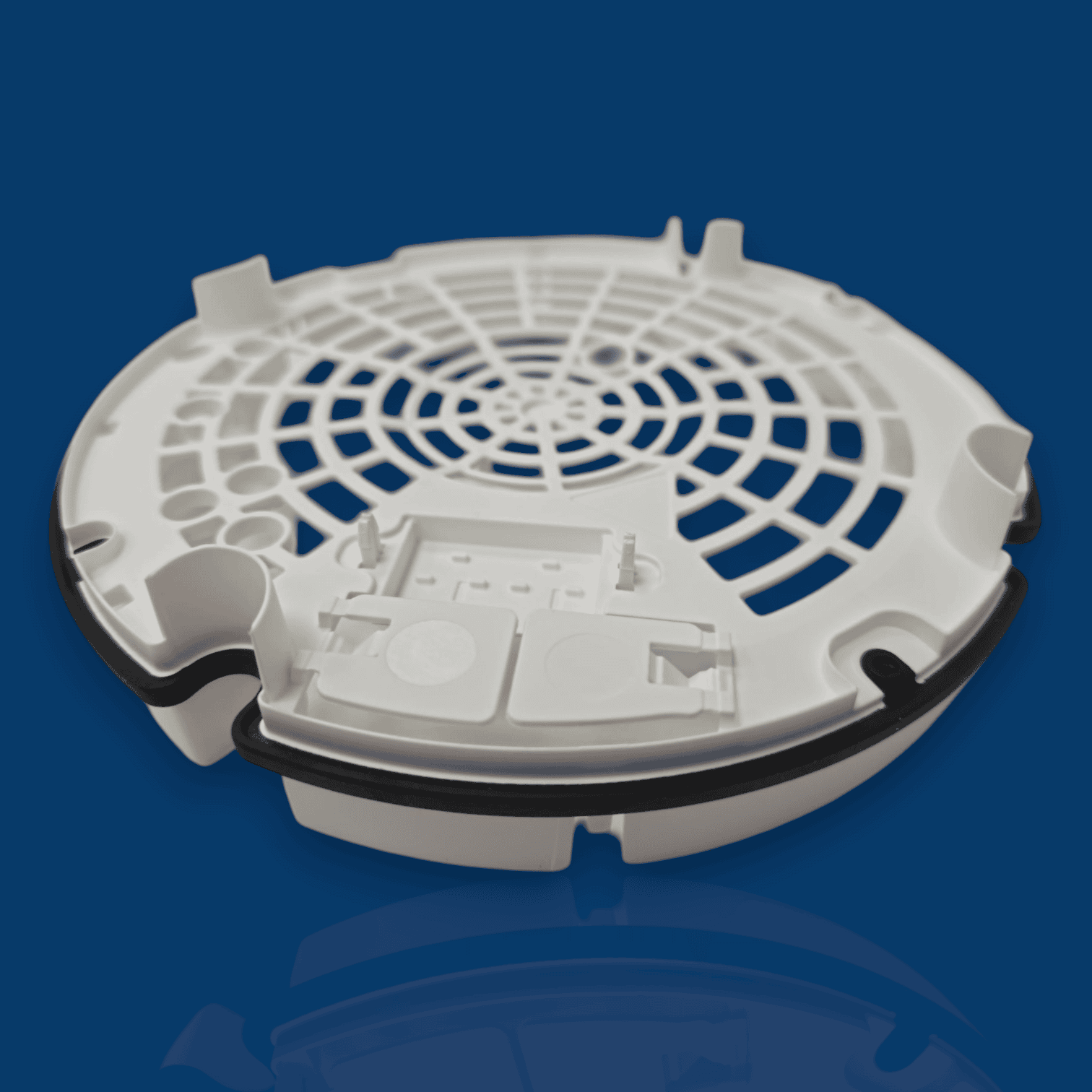
Yes. Integrated seals are among the most common applications of 2K injection molding. An elastomer is molded directly onto the plastic substrate, reducing assembly effort and ensuring a reliable long-term sealing function.
Which applications are suitable for 2K injection molding?
2K injection molding is ideal for technical plastic components with integrated functional features. Typical applications include automotive components, electrical engineering, building technology, ventilation systems, industrial equipment and mechanical engineering.
When is 2K injection molding more cost-effective than assembly?
2K injection molding is particularly cost-effective when multiple components or assembly steps can be replaced by a single integrated part. By combining materials directly during the molding process, manufacturers can reduce assembly costs, simplify production and improve overall manufacturing efficiency.